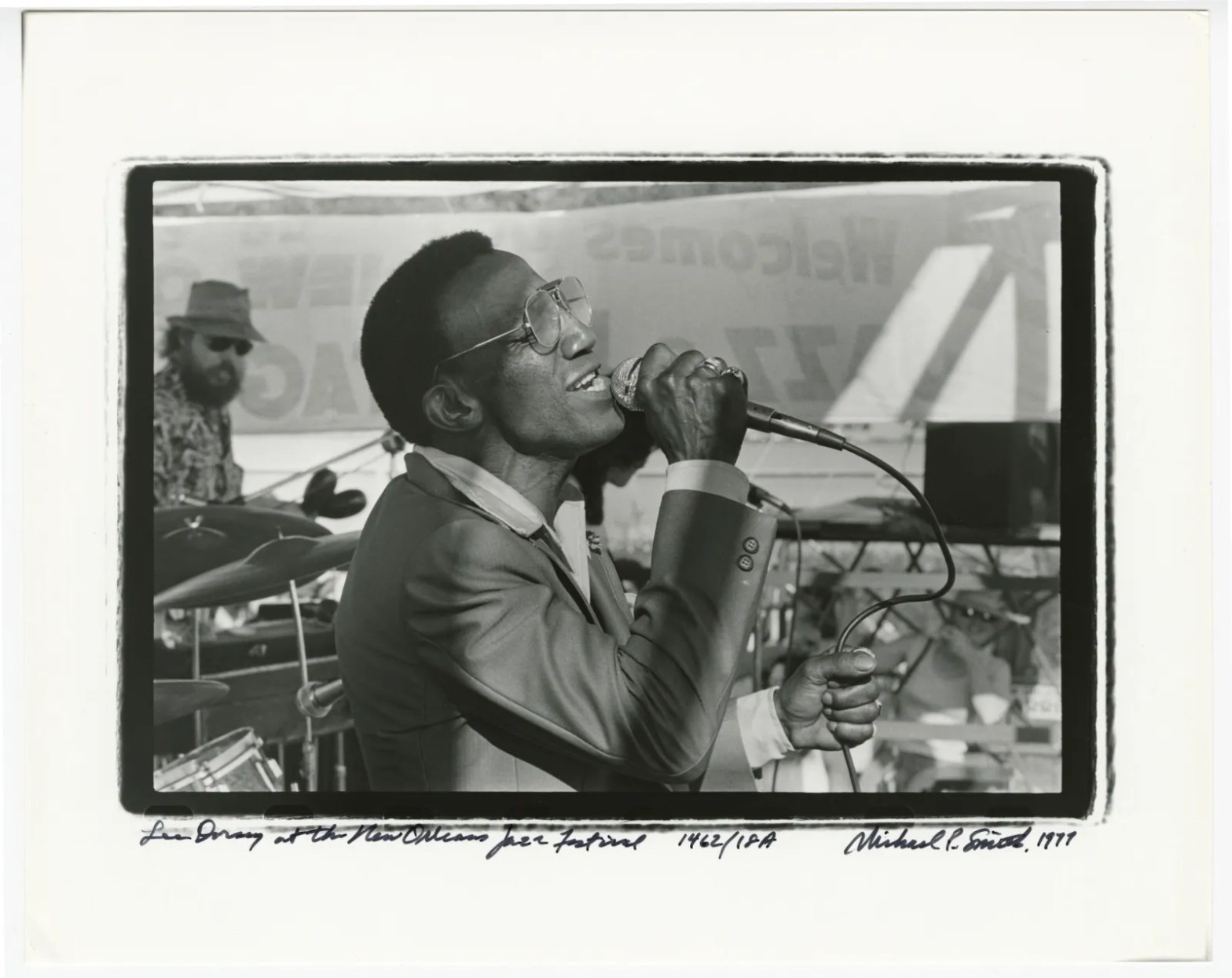
This piece was written in 2015 for a now-defunct arts publication.
It starts with bass and drums. Three notes on the bass and then repeated with the same three notes. The drums are in lock-step with the bass. The first five seconds of the song could be looped for a 15 minute song resulting in the same bass note played approximately 4,500 times.
At six seconds, the horns kick in. Horns always kick in. If this song was a bar and there were doors in this bar, these horns would kick the doors in. The trombone finishes the kicked-in horns with a trailing low sound announcing that our vocalist is about to start.
A-there’s a music in the street
A-there’s a music in the air
A little old soul beat
There’s dancin’ everywhere.
We’ve heard these sentiments in other songs before, but the obvious joy that the vocalist is expressing is contagious, so we’ll allow the risk of a cliché. In the next verse, we get a little acoustic guitar to add space and air for the vocalist. The vocalist and the horns then guide us up the scale telling us that a chorus is coming.
Follow me and you can use it
We’re gonna make a little music
You got soul a-don’t you lose it
We’re gonna make a little music
Everything’s gonna be mella
We’re gonna just a-singin’ a capella
Everything’s gonna be mella
We’re gonna just a-singin’ a capella.
With the chorus, we have arrived at our song’s destination. Background singers join the main vocalist for the second line of the chorus. Glorious harmonies ensue throughout the chorus into a wonderfully sublime vocal break. Again, let’s loop this shit and make a 45 minute song. Hell, how about 45 hours.
Now, about the title. Wikipedia tells us that a cappella is Italian for “in the manner of the church” or “in the manner of the chapel.” A cappella music “is specifically group or solo singing without instrumental sound, or a piece intended to be performed in this way.”
“Occapella” is certainly church music. Although it appears that the lead singer and company are singing about singing a cappella, the song is spelled with an “O” and the singers don’t sing without instrumentation. The bass and drums are in pocket throughout the song with horn bursts and a persistent, wispy acoustic guitar. The lead vocalist and the background singers sing together in triumph, trading off harmonies. So what’s with the spelling? Are they occupying a cappella music?
The song ends with an odd trio of saxophone, drums, and tambourine. The drums hold the groove steady. The tambourine does what a tambourine does. The saxophone adds a touch of melancholy. This isn’t a 1980s sax solo playing in the background of a Miami Vice episode, demonstrating Crockett’s loneliness despite his close friend Tubbs’ everlasting support. No, we follow the saxophone into the fade-out wondering if this call for musical harmony and partnership was just negated by a thoughtful, questioning solo. Maybe a cappella isn’t all we need.
“Occapella” was released to the world in 1971. It is credited to Lee Dorsey. Dorsey was a native of New Orleans, who died in 1986. His biggest hits are “Ya Ya” and “Working in the Coalmine,” which are both essential parts of the R&B canon. Before his music career started, Dorsey was a lightweight boxer who fought under the name “Little Chocolate.” He maintained an auto repair shop throughout most of his musical career. Lee Dorsey was even name-checked by the Beastie Boys in their song “Sure Shot.” We all should aspire to reach the great heights achieved by Lee Dorsey.
“Occapella” was written by famed New Orleans producer and songwriter Allen Toussaint along with A&R man Marshall Sehorn. The backing band on this song? The Meters. Knowing that The Meters hold the instrumentation together and presumably provide the backing vocals provides support for the message of the song.
“Occapella” is a gem. When it can be found, it’s usually spotted in the back case of a favorite antique store as the perfect gift to celebrate an anniversary. It can be passed onto the next generation. It never leaves the family.
We’re gonna make a little music.
Photograph by Michael P. Smith ©The Historic New Orleans Collection, 2007.0103.4.682
 Recliner Notes