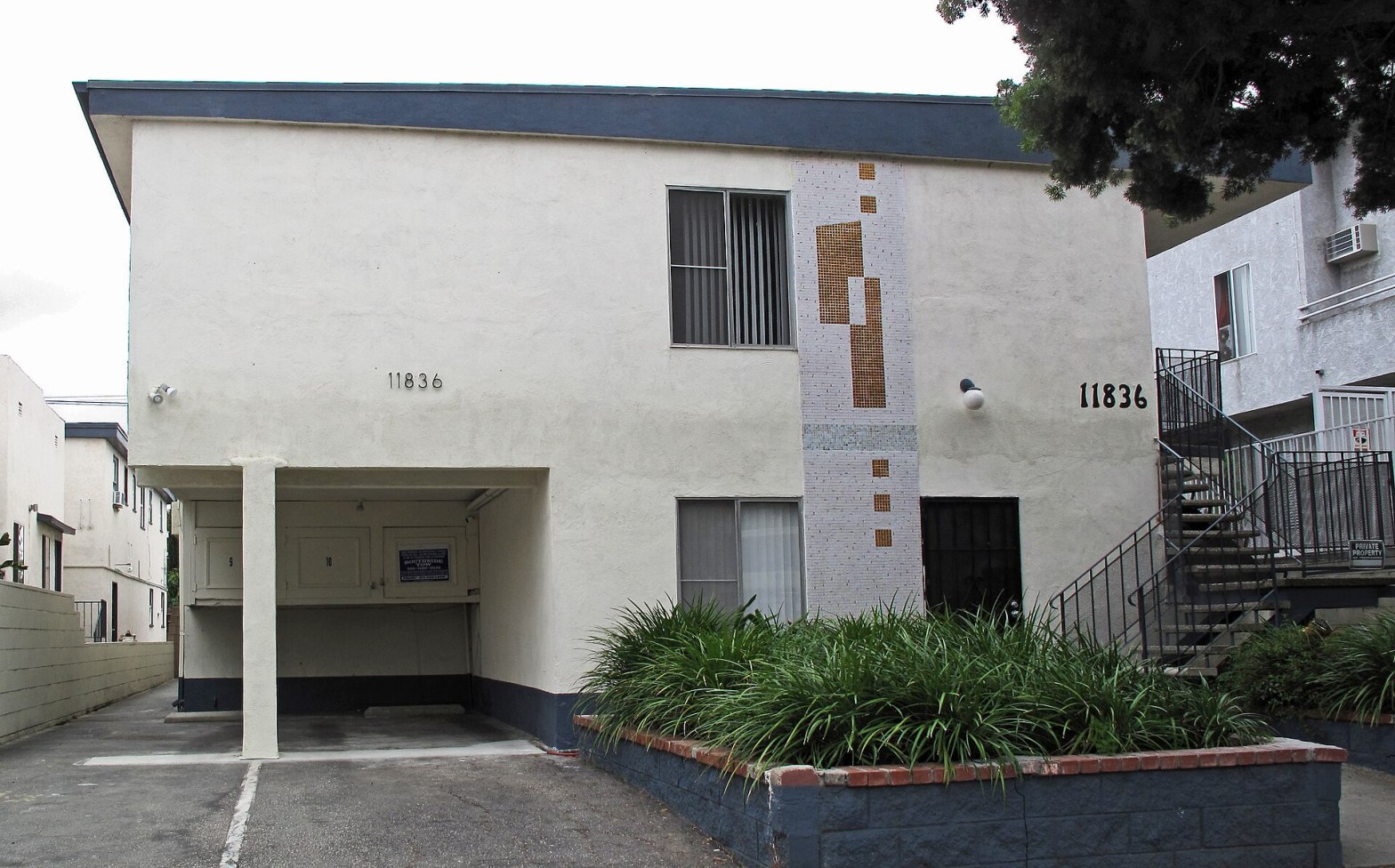
One day when I was living in the Venice neighborhood of Los Angeles in the hazy days of 1997 or 1998, my roommate M. exploded through the door of our apartment and declared to me and our other roommate W., “You have to hear this song.”
It was “Screenwriter’s Blues” by Soul Coughing from the 1994 album Ruby Vroom:
Though the album was a few years old, none of us had listened to Soul Coughing to that point in those pre-internet days. I vaguely remembered a friend who lived in New York City recommending the band to me, but I had never followed through. Their biggest hit, “Circles,” was playing on the radio at that time, but none of us were aware of it. Ruby Vroom felt like a new secret that we were giddy to keep to ourselves, especially “Screenwriter’s Blues.”
The track starts with crackling static and a sample of ominous-sounding orchestral horns before kicking into an irresistible groove, powered by upright bass and drums. Over this beat, lead singer Mike Doughty spits out a spoken word rant composed of observations, character voices, poetry, and immediate catch phrases about the city of Los Angeles, punctuated throughout by nightmarish keyboard sounds and samples.
It’s easy to see why “Screenwriter’s Blues” resonated with three LA transplants with some aspirations towards success in Hollywood. M., W., and I had all been in the same comedy troupe in college and now lived together while trying to make sense of the endless octopus of neighborhoods and the nearly daily bizarre situations that constituted Los Angeles. The fever dream specificity of the details within Doughty’s funny yet caustic lines were intoxicating:
Jewels cleaving skin between breasts.
and
You spin like the Cadillac was overturning down a cliff on television.
and
Gone savage for teenagers with automatic weapons and boundless love
Gone savage for teenagers who are aesthetically pleasing, in other words “Fly.
and
Los Angeles beckons the teenagers to come to her on buses
Los Angeles loves love.
and
I am going to Los Angeles to build a screenplay about lovers who murder each other.
The recurring character throughout “Screenwriter’s Blues” is The Radio Man, a David Lynch-esque moniker and figure, who haunts the song’s narrator by speaking directly to him, saying the usual DJ things: “It is a beautiful night out there” and “Rock and roll lives!” The rest of the utterances are far from regular patter: “Women were a curse” and “It is 5 A.M. and the sun has charred the other side of the world and come back to us / And painted the smoke over our heads an imperial violet.”
Back when radio had an impact on the culture, The Radio Man within “Screenwriter’s Blues” resembled many of the conservative-leaning voices who dotted the Southern California airwaves, not dissimilar to the LA-based talk show host John Ziegler profiled by David Foster Wallace in the Atlantic a few years later. Other times, The Radio Man sounded like someone who might have called in to Phil Hendrie’s radio program, many of whom were fake “guests” created and voiced by Hendrie himself while others were actual callers. This blurring of fact and fiction in a stew of humor, bitterness, and paranoia on the Los Angeles radio is all too present within the Soul Coughing song, especially with the repeated line woven throughout: “It is 5 A.M. and you are listening to Los Angeles.” Declaratively delivered by Doughty and emphasized by a hypnotic keyboard riff, this chorus emphasizes the bleary, up-all-night-yet-out-to-retail-jobs-in-the-morning feeling of living on your own for the first time in the big city.
Though “Screenwriter’s Blues” rang true with me, M., and W., Doughty himself wasn’t writing from experience. As he explained to the Los Angeles Times in 2007, “People thought we were from LA — we were very, very much of the New York scene.” The song was inspired by a free trip that Doughty’s mother won and used to travel to Huntington Beach to take care of her sister. Doughty tagged along and said, “I had these dreams of seeing LA — I kept thinking of Arlo Guthrie singing ‘coming into Los Ang-uh-leez.’” But Doughty didn’t feel as though he saw anything real about the city, stating “It was utter LA fantasy.”
To the three roommates living on the wrong side of Lincoln Boulevard in Venice, “Screenwriter’s Blues” was a jolt of instant recognition. The line “You are going to Reseda to make love to a model from Ohio / Whose real name you don’t know“ was especially acute. Not that any of us were having sex with anonymous models, but soon before M. introduced us to the song — it could’ve been only days before — the three of us attended a party in Tarzana, a neighborhood in the San Fernando Valley section of Los Angeles which is immediately adjacent to Reseda.
The party was thrown by a woman who was part of our larger college friend group in LA. The party was at her family’s decadent house on the side of the mountain overlooking Reseda and the rest of the Valley. Her father was a doctor known for performing off-the-books surgery in the basement of this house as a service to transplants who had settled in Los Angeles from his native country. The house reflected a kind of nouveau riche level of wealth that the three of us weren’t used to. The entrance were two massive wooden doors, which, when closed, formed the first letter of the family’s last name. The lights were off throughout, and Bjork was blasting in each room as this was the first house I encountered with speakers in every room connected to a central stereo system.
Outside, the view was breathtaking, like many witnessed in Hollywood movies and also reflecting the opening line of “Screenwriter’s Blues”: “Exits to freeways twisted like knots on the fingers.” Also overlooking Reseda was the pool and accompanying hot tub. There was a shrine just above the hot tub featuring a white plaster Jesus from which water coursed out of the stigmata in His palms and poured into the hot tub below. It was difficult not to gawk at this display of wealth and devotion.
The parties at this Tarzana house were legendary, filled with booze, pot, and all manners of Los Angeles characters. One night, a guy who had been introduced as “the biggest weed dealer in the Valley” initiated a conversation with me about him becoming my source for pot that was, on the surface, light-hearted but contained a touch of menace. I tried to explain that I wasn’t ever going to be a huge customer and not worthy of this level of salesmanship, which only seemed to increase his aggressiveness. Maybe I should’ve asked the Lord in the grotto above the hot tub for assistance and shelter? My interaction with the dealer was reflective of the mood at these parties. They contained a surreal cocktail of money, drugs, sex, ecstasy, and desperation in the Tarzana house overlooking Reseda. It gave weight to another line in “Screenwriter’s Blues”: “You live in Los Angeles, and you are going to Reseda / We are all in some way or another going to Reseda someday to die.” Some kind of death certainly felt close in the area surrounding Reseda.
While we’re on the subject, the pot we were getting from our regular guy in those days was quite intense. We eventually concluded that it must have been laced with something because it sometimes resulted in intense psychedelic experiences. Once, I swore I saw everything in black and white. Another time, reality shifted into slow motion for quick increments before quickly resuming regular speed. Another song from Ruby Vroom — “Bus to Beelzebub” — proved to be the ideal soundtrack for this particular strain of marijuana. In the song, Soul Coughing takes a sample of a Raymond Scott tune that was often used for Warner Bros.’ Looney Toons cartoons and loops it in double-time, triple-time, and what felt like sixteenth-time, resulting in a relentlessly frenetic groove. A perfect heart-racing accompaniment for this evil weed!
W. didn’t smoke at all, so, when M. and I described these experiences to each other, he would laugh at us stupid stoners, but M. and I had the last laugh. The three of us often played a video game version of the old board game Risk on W.’s early ‘90s-era Sega Genesis, usually with Ruby Vroom playing in the background. Even though M. and I would be describing perception-distorting alterations courtesy of that weed, we still somehow managed to beat W. at Risk. Usually good-humored, this enraged him, yelling, “You just said you were seeing everything in black and white and I still can’t beat you!” This only made M. and I cackle harder until we fell on to the floor. Eventually, we requested a much more mellow strain of pot to ease the intensity for everyone during these Risk sessions.
Though there are Hollywood references within “Screenwriter’s Blues” — “Men built Paramount Studios / And men built Columbia Studios” — they seemed suitably remote and unattainable. During the time we were captivated by Ruby Vroom, all three of us were working on our own individual screenplays, which were at various levels of completion. What did we do for money? Shitty paying jobs! I was employed at the Barnes & Noble on the 3rd Street Promenade in Santa Monica. M. found out about Ruby Vroom while making $6.25 per hour at the Marina del Rey Tower Records. W. was the assistant for a guy who did collections. Bad retail positions and odd working arrangements were part and parcel for living in Los Angeles while following one’s dreams.
In addition to recommending books to tourists, I also had an internship reading screenplays at a small production company in Beverly Hills, which I will refer to as Collage Films. Collage had initiated a few modestly successful movies, one or two actual hits, and a large number of terrible films. The posters for these instantly forgettable movies lined the walls of Collage’s office. The tagline for one screamed, “A woman is the only thing that stands between a man and his revenge.” Immediately adjacent to this poster was another: “What’s the one thing that comes between a man and his revenge?” Of course, the answer was a woman. These were two different movies with the exact same plot!
At first, the internship at Collage seemed glamorous as I was given a few screenplays to get my bearings, two of which were eventually produced: Blade and Men in Black. After reading a few hundred screenplays, it became seriously boring and even soul-deadeningly knowing that there was a writer behind these awful scripts and that I had the potential to follow in their footsteps for…this. I did have one claim to fame while interning at Collage. I was the one who identified the screenwriter for their “teen comedy project.” (Seriously, that was the only description they had. No real concept or plot. Just the market demographic.) I read one of his sample scripts, which I thought was very funny, but the story structure wasn’t terribly strong. I recommended him to my boss for the project, who wouldn’t have realized the script was funny without me. The screenwriter was eventually hired for the project, and it was produced, yielding a decent amount of money, not that I got my name in the credits or any sort of recognition. The screenwriter eventually joined the staff of Friends and got a few other jobs, but I lost track of him. Did “Screenwriter’s Blues” ring true for him? Does it now? Did he wind up bitterly ranting about Los Angeles and ending up in his own version of Reseda? Regardless, I’m glad I played a small part in pushing him towards something.
And what was that something? Towards the end of the Soul Coughing track, Doughty sings, “I am going to Los Angeles to see my own name on a screen, five feet long and luminous.” Was this what me and my roommates were after in Los Angeles? If it was, none of us would have said it so blatantly out loud. But it was assumed that some level of fame and success was the goal. Only one of us achieved it.
A few years after our Soul Coughing period, M., W., and I were members of a sketch comedy troupe which included other friends from our college group. We performed a few times, but the troupe eventually fizzled out before everyone went their separate ways. Soon after, M. and I left Los Angeles with our respective partners. W. stuck it out by going to film school and forming a writing team with his wife. They ended up working in television for a few different programs before eventually becoming show runners and executive producing their own show. Now, they’re happily married with two kids and, emotionally, nowhere close to Reseda.
In the Los Angeles Times piece, Doughty claims that he has “no connection” to “Screenwriter’s Blues” and doesn’t “have any interest in that voice now.” Despite this detachment, he states that after spending much more time in LA over the years since writing the song, “I found I pretty much got it right.”
Doughty did get it right in many ways for me, W., and M. The entirety of Ruby Vroom was the ideal soundtrack for late ‘90s Los Angeles. Soul Coughing’s songs on the album are catchy, wildly funny, bizarre, and thrilling. But “Screenwriter’s Blues” stood out immediately. Not only for its laugh-out-loud humor and the biographical connections, but especially for its sense of bewilderment. Being in your early twenties and trying to find a career and a life in Los Angeles is not an easy thing to do. It can be a hard and lonely place. The only way to secure oneself is by finding some sort of foothold, even when it’s 5 A.M. and you are still awake and listening.
Image: Dingbat building at 11836 Venice Blvd, Los Angeles, 2021, Downtowngal.


